Mission Report · MapMyIndia [Gtropy]Project case study
FASTag Platform
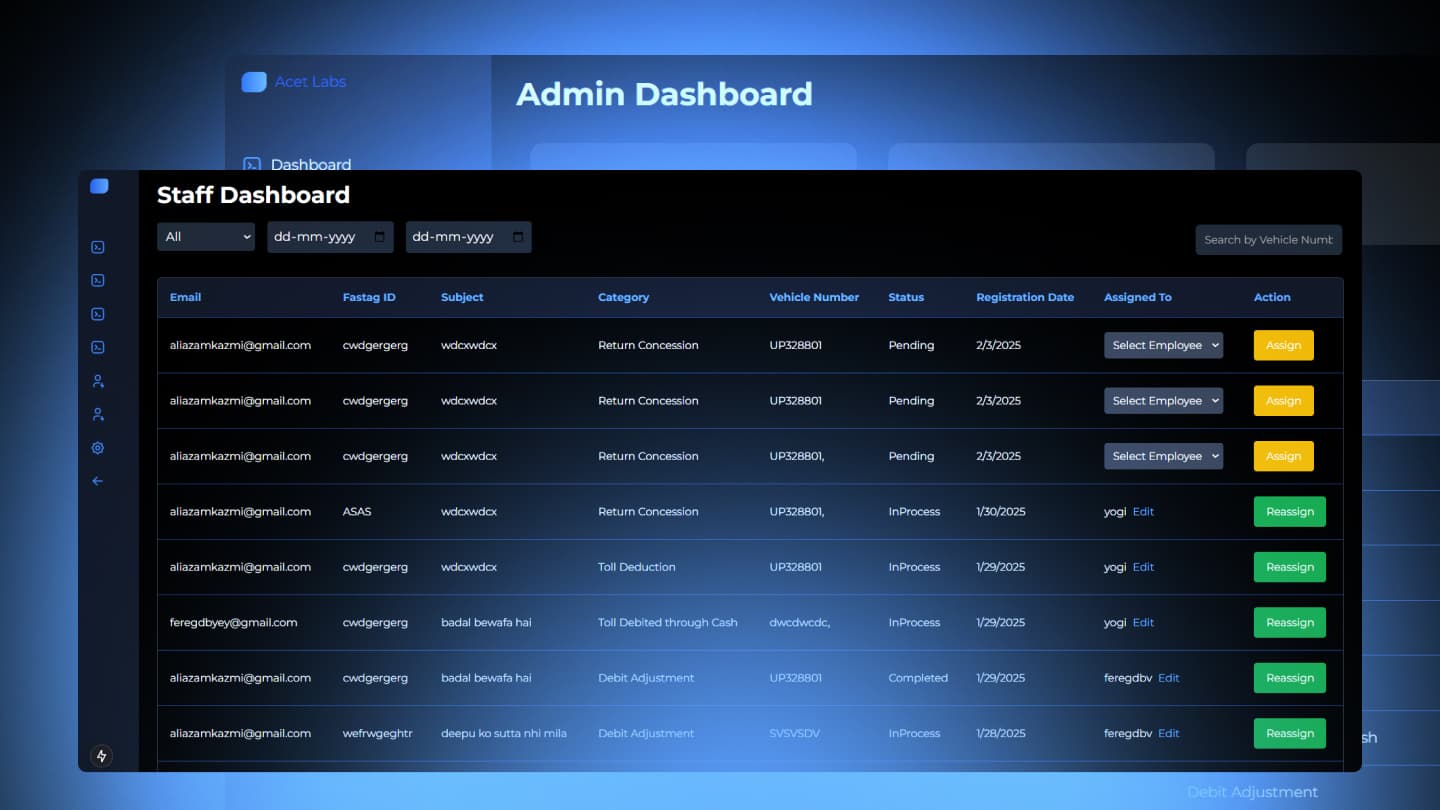
Registration flows are where products lose people. Multi-vehicle registration is where they lose them twice.
- Status
- Shipped
- Owned
- Full stack
- Scope
- Full stack
- Stack
- React
- Node.js
- REST APIs
ResultsNot yet measured
- Registration completion rate
- OTP failure rate
Full-stack FASTag registration with multi-vehicle management and OTP authentication.
FASTag registration is a form-heavy process that users do rarely and under mild stress. Owners with several vehicles have to do it several times, and every repetition is a chance to abandon.
Vehicle owners registering and managing FASTags, including fleet owners with many vehicles, and the operators supporting them.
The registration flow had to be right on the first attempt, because there is no second one; and multi-vehicle management had to feel like one account with many vehicles, not many accounts.
Onboard users with OTP authentication, let them register and manage multiple vehicles, and keep the data in sync securely across the platform.
If authentication is a phone number and a code, and a second vehicle is one screen rather than a whole flow, the registration ceases to be the reason people leave.
Full stack: a Next.js frontend with validated interactive forms, a Node and Express backend with JWT session management and role-based access, and MongoDB schemas designed around the multi-vehicle relationship.
OTP authentication and the single-vehicle registration first; multi-vehicle management second; real-time sync and notifications after the core flow was stable.
Forms that validate as you go and never lose state; a vehicle list that makes adding the next one obvious.
Responsive, form-first screens with clear progress and no dead ends.
OTP authentication, multi-vehicle management, full-stack implementation.
Next.js, Node.js, Express and MongoDB, with authentication and REST APIs. Built end to end.
A working registration and multi-vehicle management platform with OTP authentication and real-time data synchronisation.
Registration is a product, not a form. Treating it as the thing that decides whether there is a user at all changed every decision about it.